
In the previous article, we talked about Skin Fundamentals, which covered the importance of barrier strength, hydration, and pH balance. In this article, we will explore oil regulation, skin renewal, and the control of inflammation.
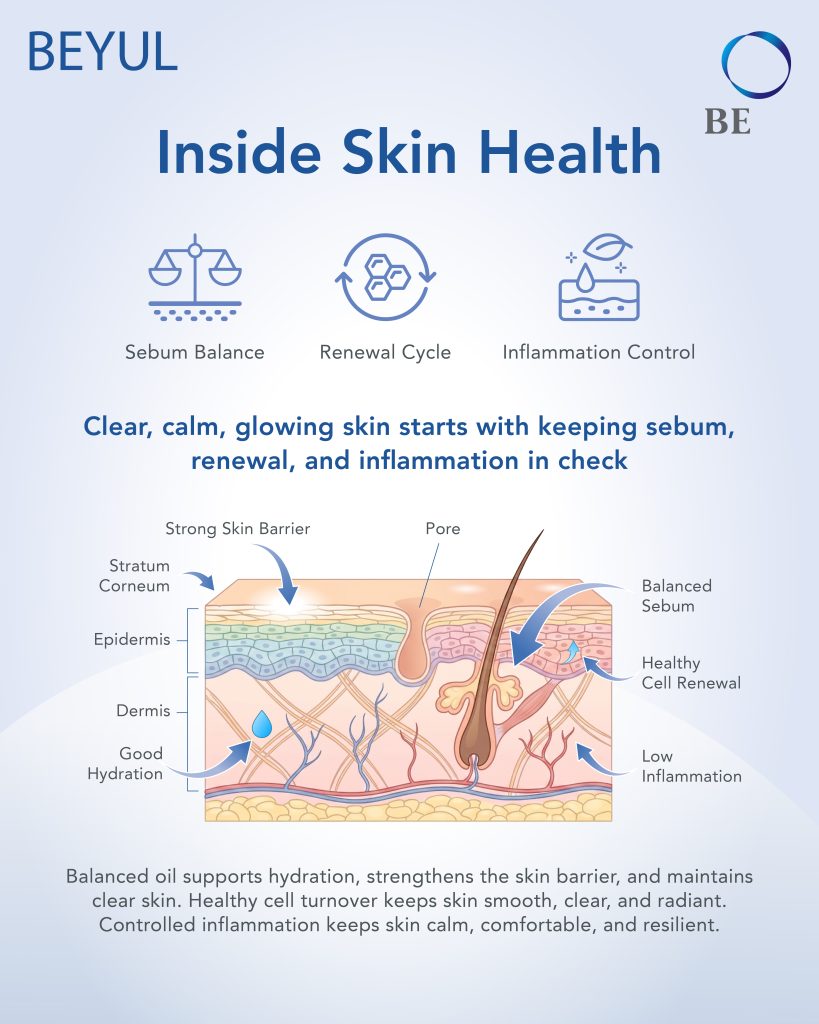
Healthy skin reflects how the skin works from within. Beyond what is visible, balanced sebum, healthy renewal cycles, and controlled inflammation work together to protect and support repair. Learning how these processes work strengthens skin knowledge and supports long-term skin health.
Balanced Oil = Healthy Skin
Sebum is the skin’s natural oil that helps protect and maintain balance. When sebum levels are well balanced, it:
- Prevents moisture loss
- Protects the skin barrier
- Strengthens the skin’s defense against external irritants
However, both too much or too little sebum production can disrupt this balance, leading to congestion, breakouts, dryness, or sensitivity.
Healthy Cell Turnover: Key to Smooth, Clear Skin
Skin stays at its best by continuously renewing itself through regular cell turnover, shedding old cells and replacing them with new ones. Balanced cell renewal helps maintain smooth texture, even tone, and clear pores, reducing dullness, roughness, and congestion.
Less Irritation, More Comfort
Calm, comfortable, and resilient skin starts with a balanced immune response. When your skin can protect itself without overreacting, redness, itching, and irritation are minimised, allowing it to heal and recover more effectively.
How to Get Healthy, Glowing Skin
In essence, maintaining balanced sebum production, supporting optimal cell turnover, and minimising irritation are key to resilient, smooth, and radiant skin. When these processes are in harmony, the skin stays protected, renewed, and calm, with a clear, even texture and a healthy, comfortable appearance.
When oil is balanced, renewal is supported, and inflammation is kept calm, skin is ready to glow.
References
- Li, Dan, et al. “A Comprehensive Review: The Bidirectional Role of Sebum in Skin Health.” Bioengineering, vol. 12, no. 12, 6 Dec. 2025, p. 1333. MDPI
- Eske, Jamie. “What is Sebum? Function, Production, Benefits, and More.” Medical News Today, 15 Dec. 2020
- Lovászi, Marianna, et al. “Sebaceous-immunobiology is Orchestrated by Sebum Lipids.” Dermato-Endocrinology, vol. 9, no. 1, 2017, p. e1375636
- Schwarz, Thomas. “The Keratinocyte in Epidermal Renewal and Defence.” The British Journal of Dermatology, vol. 162, no. s1, 2010, pp. 16-23
- Anderton, Holly, and Suhaib Alqudah. “Cell Death in Skin Function, Inflammation, and Disease.” Biochemical Journal, vol. 479, no. 15, 12 Aug. 2022, pp. 1621-1651
- Shirley, Simona N., Abigail E. Watson, and Nabiha Yusuf. “Pathogenesis of Inflammation in Skin Disease: From Molecular Mechanisms to Pathology.” International Journal of Molecular Sciences, vol. 25, no. 18, 2024, p. 10152
- Di Meglio, Paola, et al. “Early Inflammatory Processes in the Skin.” BMC Medicine, vol. 9, no. 1, 2011, pp. 1-10
- Mijaljica, Dalibor, et al. “The Sebaceous Gland: A Key Player in the Balance Between Homeostasis and Inflammatory Skin Diseases.” Cells, vol. 14, no. 10, 2025, p. 747