




Did you know your skin begins to change long before a single wrinkle ever appears in the mirror? Most of us only start thinking about skin ageing when we spot the first fine line, a hint of sagging around the jawline, or a sudden lack of radiance. By the time these surface changes show up, the underlying process has actually been underway for years.
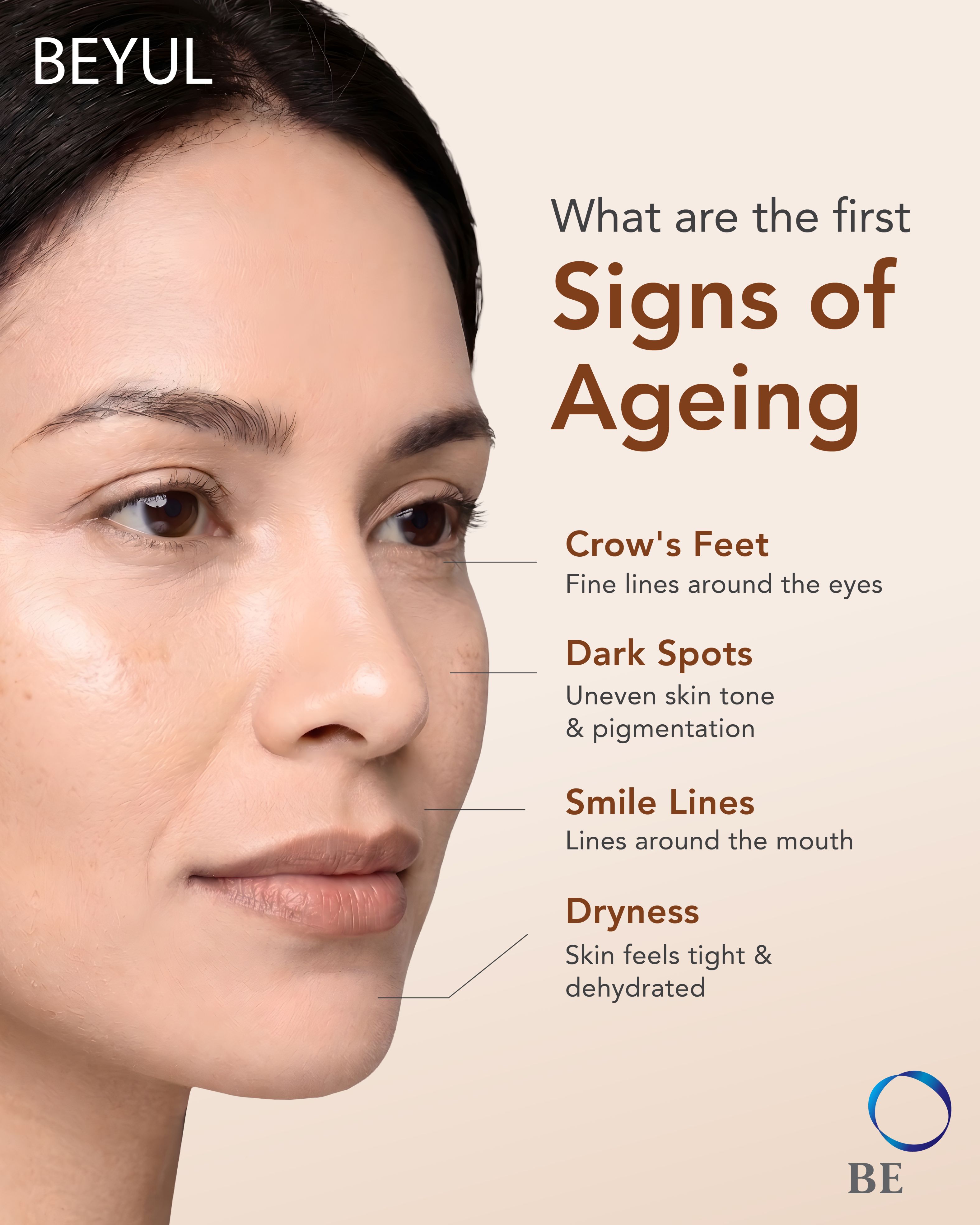
Treating skin ageing only when it becomes visible is like painting over cracked plaster. It covers the surface without fixing the underlying structure. To keep skin healthy, firm, and lifted over the long term, we need to understand the "invisible" ageing clock ticking quietly beneath the surface.
Visible vs. Invisible Ageing: What is Really Happening?
When we talk about skin ageing, it helps to separate what we see on the outside from what is occurring deep inside the dermal layers.
-
Visible Signs: Crow’s feet (fine lines around the eyes), dark spots (uneven skin tone and pigmentation), smile lines (lines around the mouth), and dryness (skin feels tight and dehydrated).
-
Invisible Signs: Collagen and elastin breakdown, oxidative stress and inflammation, slower cell turnover, micro-creases from expressions, and weakened skin barrier.
Surface symptoms are simply the final stage of structural changes taking place deep within the dermis (the middle layer of skin).
The 4 Hidden Drivers of Deep Skin Ageing
Several microscopic changes take place long before you notice any physical difference on your face.
|
Hidden Driver |
How It Works |
Impact Before Surface Signs Appear |
|
1. Structural Protein Breakdown |
Natural collagen drops by about 1% each year, starting in your mid-twenties; sun and pollution speed up this loss.
|
The skin slowly loses its internal firmness long before lines or sagging appear. |
|
2. Slower Cell Renewal |
Natural cell renewal slows from 28 days in younger skin to 45 days or more by your fifties.
|
Older cells build up, making it harder for the skin to repair itself and stay smooth. |
|
3. Micro-Creases from Movement |
Repetitive facial expressions (smiling, squinting, and frowning) fold skin that has lost support.
|
Microscopic folds can form deep in the skin before dynamic creases become permanent surface wrinkles. |
|
4. Weakened Skin Shield and Inflammaging |
Daily exposure to harsh weather, over-scrubbing, or pollution damages the outer skin barrier, causing low-grade internal irritation.
|
Triggers quiet damage that can affect healthy cells without causing immediate surface redness. |
Why Surface-Level Skincare May Fall Short?
Standard moisturisers and surface-level creams often focus on hydrating the outermost layer of skin. While hydration temporarily plumps the surface and smooths fine lines, it rarely penetrates deep enough to influence collagen synthesis or repair structural micro-damage.
Focusing solely on visible symptoms means you are constantly reacting to past damage rather than protecting your skin’s structural future. True preventative skincare requires ingredients and habits that support the dermal matrix, protect cellular energy, and maintain a robust skin barrier.
If your skin is changing deep down, why is your skincare only sitting on the surface?
References:
-
Li, Yong, et al. "Age-Associated Increase in Skin Fibroblast–Derived Prostaglandin E2 Contributes to Reduced Collagen Levels in Elderly Human Skin." Journal of Investigative Dermatology, vol. 135, no. 9, 2015, pp. 2181–2188.
-
Varani, James, et al. "Decreased Collagen Production in Chronologically Aged Skin." The American Journal of Pathology, vol. 168, no. 6, 2006, pp. 1861–1868.